Kishanganj, located in the northeastern part of Bihar, is a district known for its rich cultural heritage, natural beauty, and harmonious blend of traditions. Surrounded by lush green landscapes, flowing rivers, and fertile agricultural fields, the region holds a unique identity that reflects the spirit of unity in diversity. Historically, Kishanganj has been an important center for trade, education, and cultural exchange due to its strategic location near the borders of West Bengal and Nepal. The district is home to people from different communities, languages, and traditions, creating a vibrant social fabric that makes the town both welcoming and culturally significant. Festivals, local markets, traditional crafts, and historical landmarks together showcase the deep-rooted heritage that continues to shape the identity of Kishanganj today.
Overview Of Kishanganj
Kishanganj is a vibrant district located in the northeastern corner of Bihar, known for its cultural richness, natural beauty, and growing development. Positioned near the borders of West Bengal and Nepal, the district serves as an important gateway for trade, transportation, and cultural exchange. With its scenic rivers, fertile agricultural lands, and peaceful surroundings, Kishanganj reflects a harmonious blend of tradition and progress. The district is home to diverse communities who live together with unity, preserving centuries-old customs, languages, festivals, and heritage while embracing modern opportunities for growth and advancement. Traditional music, folk dances, local crafts, and regional cuisines are also important parts of the cultural identity of the district.
Geography Of Kishanganj
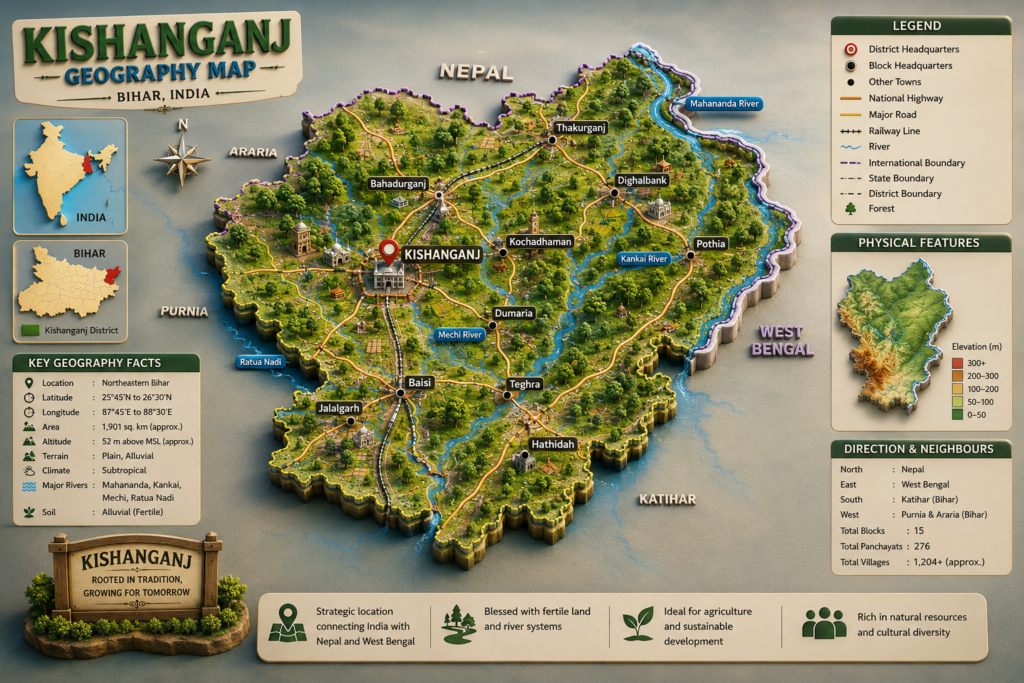
Kishanganj is located in the northeastern part of Bihar, India, and is one of the most geographically significant districts in the state. The district shares its borders with West Bengal to the east and Nepal to the north, making it an important gateway for regional trade, transportation, and cultural interaction. Covering an approximate area of 1,900 square kilometers, Kishanganj is characterized by fertile plains, flowing rivers, green agricultural lands, and a subtropical climate. Its strategic location and natural landscape contribute greatly to the district’s economic activities, agricultural productivity, and cultural diversity. Several important rivers such as the Mahananda, Mechi, Kankai, and Ratua flow through the region, providing water for irrigation and supporting farming activities, although these rivers sometimes cause floods during the monsoon season.
History & Cultural Heritage
Kishanganj, located in the northeastern region of Bihar, has a rich historical and cultural legacy shaped by centuries of trade, migration, and cultural exchange. Due to its strategic location near the borders of West Bengal and Nepal, the district has long served as a gateway connecting different regions, communities, and traditions. Over time, Kishanganj became a meeting point of diverse cultures, languages, and beliefs, which greatly influenced its social and cultural identity. The district’s historical roots can be seen in its traditional architecture, religious landmarks, ancient trade routes, and the customs preserved by local communities. Traditional music, folk dances, local crafts, and regional cuisines are also important parts of the cultural identity of the district.
Kishanganj Climate & Seasons
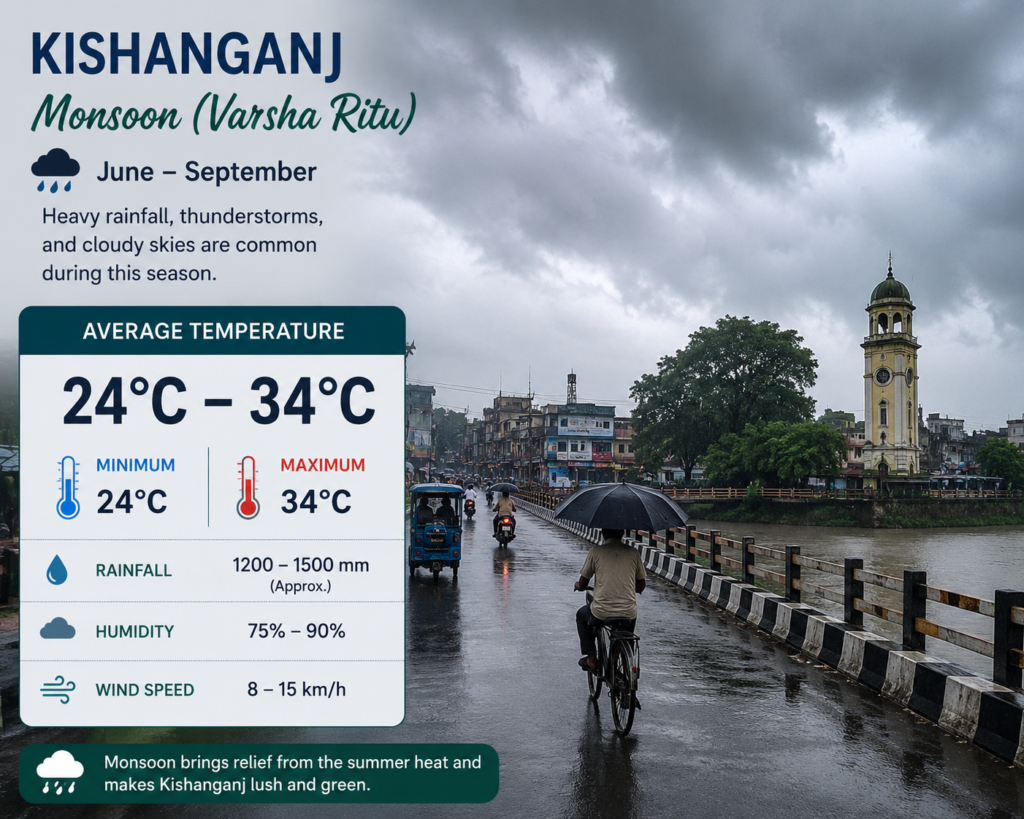
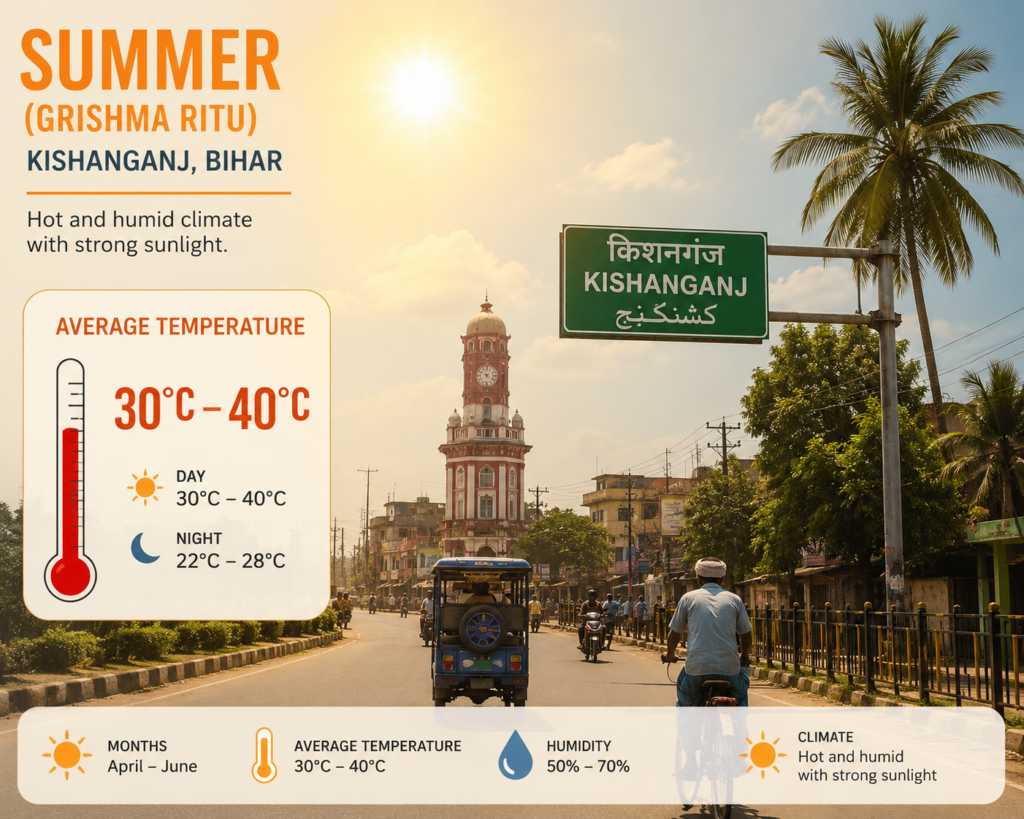
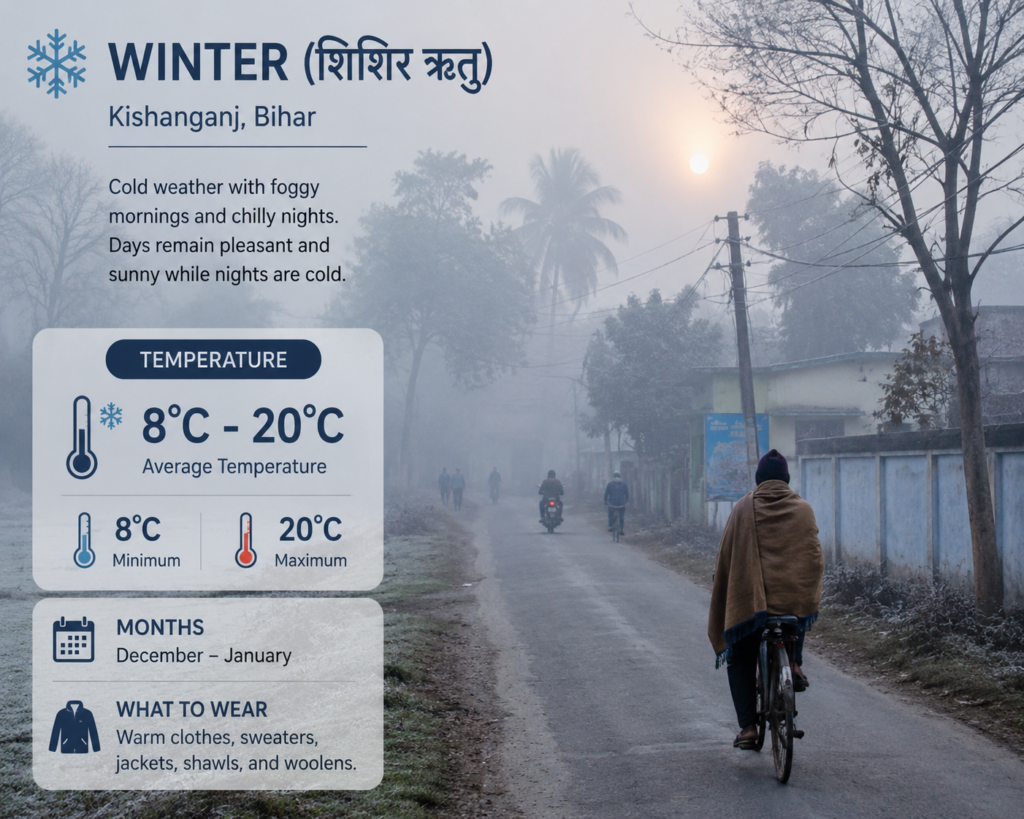
“Experience the Beauty of Every Season – From Sunny Summers to Refreshing Monsoons and Pleasant Winters.”
Agriculture Of Kishanganj
Kishanganj is particularly known for the cultivation of tea, maize, paddy, and jute, which are among the major crops grown in the region. Tea cultivation has gained special importance in recent years, making Kishanganj one of the emerging tea-producing regions of Bihar. Farmers also grow wheat, pulses, mustard, and various vegetables depending on the season and soil conditions. Modern farming techniques, improved irrigation systems, and government agricultural support programs are gradually helping farmers increase productivity and improve their livelihoods. Along with crop cultivation, animal husbandry and dairy farming also contribute to the rural economy of the district. Agriculture in Kishanganj not only supports economic growth but also preserves the traditional lifestyle and cultural identity of rural communities.
Dance Forms of Kishanganj
Kishanganj, located in the culturally diverse region of northeastern Bihar, is known for a blend of traditional folk dances influenced by Bihar, Bengal, and neighboring communities. The dance forms of Kishanganj reflect the district’s rich heritage, festivals, agricultural lifestyle, and communal harmony. These dances are usually performed during religious celebrations, weddings, harvest festivals, fairs, and cultural gatherings, showcasing joy, devotion, and togetherness among the people. Jat-Jatin is one of the most popular folk dances performed in the rural areas of Bihar, including Kishanganj. It is usually performed during the monsoon season and portrays the emotional relationship between a husband (Jat) and wife (Jatin). The dance highlights themes of love, separation, and village life through expressive movements and traditional folk songs.
Population Of Kishanganj
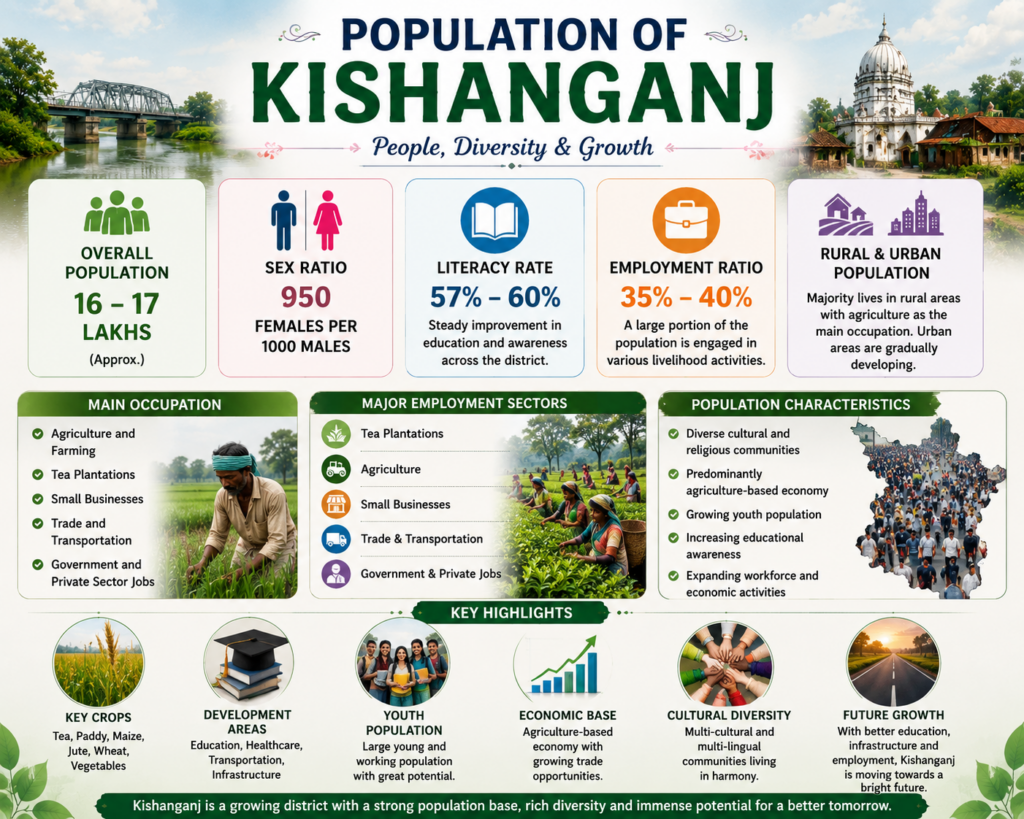
Overall Population: Approximately 16 – 17 Lakhs
Sex Ratio: Around 950 females per 1000 males
Literacy Rate: Approximately 57% – 60%
Employment Ratio: Around 35% – 40%
Main Occupation: Agriculture and Farming
Major Employment Sectors:
Tea Plantations
Agriculture
Trade & Transportation
Government & Private Jobs
Economic Base: Agriculture-based economy with growing trade opportunities
Development Areas: Education, Healthcare, Transportation, Infrastructure
Industries Of Kumbakonam
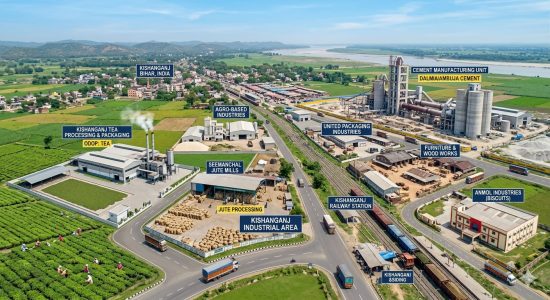
Kishanganj is steadily developing into one of the important industrial and commercial centers of the Seemanchal region in Bihar. The district is widely recognized for its rich agricultural resources, tea gardens, and growing industrial infrastructure that together contribute to the region’s economic progress. Industries such as tea processing, agro-based manufacturing, jute production, packaging industries, furniture works, cement manufacturing, and small-scale enterprises play a major role in generating employment and supporting local businesses. These industries not only strengthen the economy of Kishanganj but also help improve the livelihood of thousands of families connected with farming, trade, transportation, and manufacturing activities.
Transporatation of Kishanganj
By Train
Transportation by bus plays an important role in connecting Kishanganj with nearby towns and major cities across Bihar and neighboring states. Government and private buses operate regularly, providing affordable and convenient travel for students, workers, traders, and tourists
By Bus
Railway transportation is one of the major strengths of Kishanganj, connecting the district with important cities such as Kolkata, Delhi, Guwahati, and Patna. Kishanganj Railway Station serves as a key junction in the Northeast Frontier Railway zone
By Air
Air transportation near Kishanganj is supported by nearby airports such as Bagdogra Airport in West Bengal, which connects the region to major Indian cities. These air services help travelers, tourists, and business professionals reach Kishanganj quickly and comfortably.